By NaJaRee Nixon
July is Disability Pride Month. For a lot of people, that's news. And that's okay. It was once new to me too.
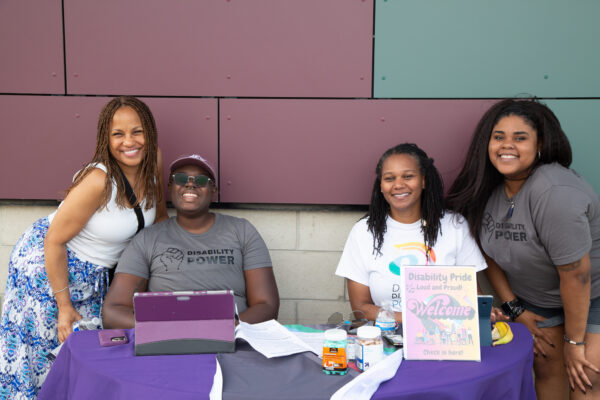
I'm Na’JaReé. I'm Black, queer, disabled, and I love my city. I organize with Detroit Disability Power because I hold firm that Detroit has something all of us are looking for. And that something lives among the over 125,000 disabled residents that call Detroit home.
I’m not offering you a cheap feel-good line. I mean it literally: politically, strategically, and even spiritually, disabled people carry the wisdom we need right now.
From even before my days as a student at Cass Tech, I’ve grown up watching Detroit fight for itself. I’ve seen us extend mutual aid from the East to West Side in life-saving ways that just don’t make the news. I’ve seen activists, organizers, artists, and those that prefer their struggle have no title pour themselves into making this city livable. And I mean truly livable – with art, good food, and the chance at a childhood. I have so much respect for that work. I’ve benefited from that work. I come from that work.
But for me there’s an elephant in the room, something consistently missing across progressive and abolitionist spaces across the city: disabled people. And it’s not because we don’t exist – not when more than 1 in 4 Detroiters has some disability and/or chronic illness.
We’re missing from the room because far too many well-meaning organizations haven’t made room for us. Events still aren’t accessible. Coalitions avoid reaching out to “high needs” participants. Equity frameworks get built without a single person with a disability in the room.
In most instances, this Ableism isn’t from malice, but from a missing point of view. And, in truth, a failure of missed opportunities for solidarity and life-saving policy wins. Worst of all, Ableism within your movement or organization is the biggest driver of burnout and turnover.
Every system of oppression and harm eventually impacts the body and health of the individuals on the receiving end. Long, hard shifts of back breaking labor for years; racist neglect from healthcare professionals; lung and brain damaging air pollution from nearby oil refineries; gun violence that leads to paralysis; chronic stress from gendered expectations and pressures – these things aren’t abstract. Sure not all disability comes from marginalization, but a lot of preventable or premature disability is happening at disproportionate levels in communities where Black and brown people live. These -ism words we hear so often (racism, sexism, ableism) they’re not just theories. They carry consequences that look like lives cut short.
Not a New Struggle
The fight for Disability Justice is nothing new to Detroit, and it’s definitely not separate from all the other movements happening locally. Disability Justice is where all struggles live, in real people’s bodies, in real time.
If you’re working towards justice and you’re serious about it – be it in housing, transit, education, healthcare, or voting rights – and you don’t have a thorough disability analysis, you’re missing a huge part of your own story. It’s not just an incomplete narrative of freedom, it’s unsustainable organizing.
“Leadership of and from the most marginalized” is a Community Organizing value that’s been tried and true for generations. Disabled people are the most impacted by every broken system in our country. So we’re not peripheral to the solutions we need, we’re central to them.
The reason I’m writing this to you now, the reason I believe disabled wisdom is so necessary, is because under this administration we’ve seen some of the most obvious signs that disabled people are being used as the guinea pigs to test what civil protections they can repeal that will make institutionalizing all of us easier. From immigrants to unhoused people to protestors – as the canary in the coal mine, the disability community is shouting: pay attention!
The resources that make lives survivable for disabled people – SNAP and Medicaid – have been drastically defunded, ending care for millions. And in June of 2026, just last month, the Department of Justice issued an opinion stating that in their view disabled Americans don’t have a right to receive care in their homes, in their communities. Without the resources we need to live, and without the legal protections in place to keep us in our homes, the next step is clear: institutionalization.
Our government wants to abandon its most noble duty, the reason we set up a government in the first place: protect our most vulnerable. They want disabled people out of the picture because our demands are the most comprehensive and liberating. The world disabled people need to thrive in is exactly the world that squashes authoritarianism.
We aren’t fighting separate fights. If you champion abolition, you’re fighting for disabled people. If you champion for Detroit families, you’re fighting for disabled people. We are the same people. And we want to stay free.
Becoming Visible
Disability Pride Month exists because visibility alone is resistance. In a political moment fabricated to make us feel powerless and isolated, we keep resisting and we keep showing up hopeful, committed, and unafraid. As people with disabilities, we’re no strangers to a bad day, a bad week, a bad year even. We are showing up loud and proud, despite so much pushback. We’ve always found ways to sustain hope because we know it’s not a fleeting emotion or passing thought, it’s a practice. A practice passed down generation after generation that many of us benefit from today as we live lives once thought impossible by our ancestors.
The ability to keep hope alive through community care, and the deep understanding of what the root of the issues are, is the wisdom we need right now. And it lives right here among us.
There’s no longer a viable excuse – it’s time your call for justice includes us all. Organizers and non-profit leaders, I’m not calling you out, I’m inviting you in with questions. Ask yourself: are there disabled people in the rooms I’m in? Are they helping with strategy or just receiving services or small tasks? How am I making sure that the internal dynamics of my organization are also accessible? How can I level-up my intersectional analysis?
To help you get started, Detroit Disability Power is here as a partner, consultant or ally. We’re not the only ones here, though. You have access to the City’s Office of Disability Affairs, founded in 2021 to support residents. Also, the City Council runs a Disability Task Force chaired by Councilmember McCampbell that’s open to you on a monthly basis. Other nonprofits like Warriors or Wheels are also here fighting the good fight.
There are many ways to embrace and learn more about the disability lens. Pick one this month and start your commitment.
NaJaRee Nixon is a Community Care Organizer at Detroit Disability Power. Learn more and get involved at DetroitDisabilityPower.org.