
News & Commentary
Jun 01, 2015
Campus Controversy: The Fight To Remove EMU’s Racially Offensive Logo
The ACLU of Michigan has been working closely with Native American students at Eastern Michigan University to compel the university to permanently dump the racially offensive "Hurons" logo that the school decided to resurrect two decades after retiring the controversial symbol.
By Plenty

May 21, 2015
ACLU Lawsuit: Michigan ID Policy Exposes Transgender Men and Women to Risk of Harassment, Violence
DETROIT — The American Civil Liberties Union and ACLU of Michigan announced on Thursday that they have filed a federal lawsuit against the Michigan Secretary of State challenging a department policy that makes it impossible for many transgender individuals to correct the gender on their driver’s licenses and other forms of identification.
By ACLUMICH_DDawsey
Apr 29, 2015
Why Did the Government Send Immigration Agents to Arrest (And Kill) A U.S. Citizen?
Against a backdrop of a now-familiar litany of acts of violence by the police against African Americans nationwide, the ACLU of Michigan is compelled to raise questions about the killing of 20-year-old Terrance Kellom by an Immigration and Customs Enforcement (ICE) agent in Kellom’s Detroit home.Foremost among those questions: Why was ICE involved in non-immigration law enforcement activity?The ICE mission involves immigration enforcement, and answers must be provided about how and why a U.S. citizen found his way into the line of fire of an ICE firearm. Kellom, the target of a multi-agency fugitive apprehension task force that included ICE officers, was shot and killed by the agent as he emerged from the attic of his home. Although law enforcement officers claim Kellom was wielding a hammer when he was killed, Kellom's father, who was home when his son was slain, has vehemently denied that his son was armed in any way.The unjustified use of deadly force by law enforcement officials has become the focal point of national mass unrest. As life slipped away from Terrance Kellom in Detroit, the City of Baltimore was melting amidst uncontrollable flames ignited by those enraged about the fate of Freddie Gray, yet another black youth who died in the custody of police.Police violence against communities of color has long, deep historical roots. In Michigan in recent years, we've endured the slaying of 7-year-old Aiyana Stanley-Jones by a SWAT officer in Detroit; the killing of Milton Hall by a firing squad of cops in Saginaw; the slaying of Aura Rosser in Ann Arbor by an officer who saw fit to shoot her with a gun while his partner used only a taser; and the wanton beating of motorist Floyd Dent in Inkster during a routine traffic stop.But the gravity and extent of that violence has only recently become apparent to the broader society because of technology that records vivid, horrible images of killings and other acts of police brutality.At a time when levels of frustration within communities victimized by police violence continue to grow, it is especially important for the law enforcement community to exercise appropriate restraint when contemplating the use of deadly force. In this case, the community needs an answer to the question of whether the killing of Terrance Kellom was unavoidable—and if not, whether as a fugitive he posed such an imminent risk of harm to the community that it was necessary for an ICE agent to kill him.It becomes increasingly apparent that having the capacity and authority to use deadly force demands a special level of maturity, mental health and demonstrated responsibility. It demands as well transparency and accountability.The ACLU of Michigan calls upon all law enforcement agencies in any way connected with the death of Mr. Kellom to not only respond to community questions about his death promptly, but to also take steps to ensure that law enforcement officers and agents are mentally and emotionally fit to carry deadly weapons, and on those occasions when deadly force is used improperly that law enforcement agencies are fully forthcoming with information and that their employees are held appropriately accountable for their actions.By Mark Fancher, staff attorney for the ACLU of Michigan's Racial Justice Project
By admin
Apr 29, 2015
My Day (and Night) at the Supreme Court
As I lay in my sleeping bag on the sidewalk outside the Supreme Court on Monday in line for Tuesday’s marriage equality argument, my mind was racing. Primarily, I marveled about how far we’ve come as a society in recognizing the dignity and rights of gay people in such a short period of time.
I thought about the fact that when I attended a small, close-knit high school in rural Maine, being gay was so taboo, and being openly gay was so dangerous, that I honestly thought that there were no gay students in our school. I was wrong. When I returned for my reunion a couple of years ago, the atmosphere has changed to such an extent that nearly a third of the students were out—including my best friend!
I also thought about all the difficult legal battles we at the ACLU have fought over the past two decades to afford gay residents of our state even the most basic rights—including the right to jointly adopt children with one’s partner; the right to form a Gay-Straight Alliance in high school; the right for a worker to receive health benefits for his or her same-sex partner; and, most recently, the right of the couples who married the day after a federal judge struck down the Michigan ban on same-sex marriage to have their marriages recognized by the state.
While we won most if these cases, it was remarkable to think how the government fought us tooth and nail and spared no expense to defend discrimination. And it was satisfying to think that now there was a growing consensus in society that the ACLU was on the right side of history.
I had been to five oral arguments at the Supreme Court and sat at counsel table for three of them. However, this case was special. When I started at the ACLU 18 years ago, the idea that we would achieve marriage equality in such a short time was a pipe dream. But here we were, sleeping outside for the opportunity to witness oral argument in what was likely to be landmark civil rights victory – a rare happening with such a conservative Supreme Court.
The argument itself was fascinating. At first, the conservative justices peppered Mary Bonauto, a hero of the gay rights movement for decades, with questions suggesting that the court was powerless to declare a right to same-sex marriage when the 17 countries in the world that recognize same-sex marriage did not do so until the 21st century. We were concerned. Why were the justices so fixated on what Plato thought about gay relationships in ancient Greece rather than the blatant discrimination gay couples faced today?
But then the more liberal judges, and yes, Justice Kennedy too, poked some major holes in the state’s argument that denying gay couples the right to marry was okay because the state wanted to insure that children would grow up in a home with married parents. How exactly does withholding marriage from one group, increase the value of marriage to the other group?
Isn’t one of the goals of marriage to bestow dignity on the couple and doesn’t that apply equally to same-sex and opposite-sex couples? Doesn’t the constitution place limits on the ability of people to vote for discriminatory measures? How can religious concerns be used to discriminate against gay couples any more than it can be used to discriminate against interracial couples? Wouldn’t the children of gay couples benefit if their parents could marry?
The arguments produced some noteworthy moments that only those present could truly experience: A scary, anti-gay activist interrupted argument by screaming at the top of his lungs about abomination and hell, and he continued to yell for several minutes as he was dragged out of the courtroom by marshals. The audience chuckled loudly when Justice Ruth Bader Ginsberg (a/k/a the Notorious RBG) asked Michigan’s attorney something like, “If it’s true, as you say, that the state’s sole interest in marriage is procreation, could the state deny a marriage license to a 70-year-old?” And, at one point, Justices Scalia and Thomas leaned back so far in their chairs it looked like they were sleeping in a lounge chair by the pool rather than presiding over a landmark civil rights case.
As I stepped outside after the argument onto the sunny steps of the Supreme Court and looked out at the hundreds of gay pride flags and signs, I felt optimistic about the capacity for society to change. Obviously, we have a long way to go until LGBT persons have true equality and there are so many seemingly intransient problems that we face in this country—continued oppression of people of color and the poor, attacks on reproductive freedom, the loss of privacy, and mass incarceration, to name just a few. But, at that moment at least, I felt hopeful that we are capable of transforming society to honor civil liberties and human rights.
By Michael Steinberg
By admin
Apr 22, 2015
Shoshana Speaks: Mom Who Was Wrongly Arrested, Strip-Searched Tells of Ordeal
It’s almost four years from the day I was forced off an airplane in Detroit, held for hours in a cell, strip-searched, and interrogated without explanation. Yet when I talk or think about the incident, it is fresh enough that I can still feel the horror, confusion, and anger that consumed me that day. Sometimes it seems so surreal that it happened to me. Other times I intellectualize it and know that this happened because our system has flaws.
But today we have reached a settlement that serves as a great step forward in putting the incident behind me and helping to ensure that others don’t face the same experience I endured on the 10th anniversary of 9/11.
The incident made national news, and a blog post I wrote the following day went viral on social media, and then gained a life of its own in the media for a few weeks. I had no idea the maelstrom of activity coming my way, nor the enduring legal battle that would ensue. But in the end, I am relieved that some good has come out of this awful experience.
That Frontier Airlines and the Wayne County Airport Authority are now more aware of racial profiling, civil liberties, and discrimination issues is a benefit to all who fly, and maybe other airports and other airlines will take notice and follow suit.
That Judge Berg in the federal court in Detroit wrote that constitutional rights trump imagined security threats puts language into the law books that can be used to aid similar cases that come down the pike. The decision is a reminder that people shouldn’t be pushed around in the name of national security, particularly because of the color of their skin or the sound of their names.
That the ACLU stood by me, knowing that what happened to me was wrong, gives me faith that there are people who fight tooth and nail to bring about justice.
And that maybe people have begun to learn that campaigns like “See Something, Say Something” will not actually move the country forward or make us safer. In fact, they only stoke the flames of fear and suspicion instead of helping us come together as a united, democratic, and free-thinking country.
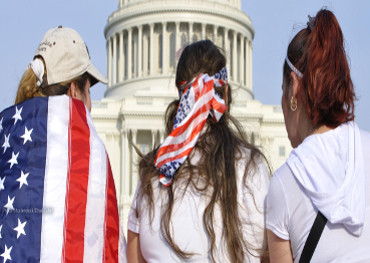
One of the most poignant questions I received during the media’s attention to my story was: “Do you think you are patriotic?”
I had to stop and think about that question for a moment, as the words “patriot” and “patriotic” have become so warped in the last 14 years that it seems there’s no room left for skepticism or criticism of government.
But I told the reporter that I believed I was a patriot because I want what is best for this country and its people. And because I believe that being truly patriotic means expecting your country to continually evolve toward a more equal and just society.
And that is what I believe has happened with the settlement of my case.
I sincerely hope that it serves as a catalyst for progress and lets others who have been discriminated against in the name of national security stand up for their constitutional—and human—rights.
By Shoshana Hebshi
By admin
Apr 21, 2015
A Zero-Sum Game: How Michigan’s School Discipline Laws Harm Special-Education Students
Special-education students in Michigan are being pushed out of public schools at an alarming rate—with far too many of them being driven directly in the school-to-prison pipeline. And increasingly, our zero-tolerance laws are a big reason why.
Michigan has one of the most expansive zero-tolerance policies in the nation, second only to Texas. Meanwhile, Michigan is one of only 12 states whose zero-tolerance laws enforce mandatory expulsion for violations beyond possession of weapons.
These laws are problematic because they increase the likelihood that a student will be expelled or suspended from school for minor offenses and general misbehavior, not for potentially dangerous offenses. Minority students and special education students are particularly likely to be suspended and/or expelled for these reasons.
Special-education students are entitled to certain accommodations under Michigan law, through federal laws such as IDEA (the Individuals with Disabilities Act) and state laws such as the MMSEA (Michigan Mandatory Special Education Act) and Section 504.
However, expansive zero-tolerance policies often conflict with these laws, such as in instances where the behavior of special-education students may mistakenly be seen as harmful. Special education students may then be punished for behaviors that are out of their control and pushed into the school to prison pipeline. And from there, they are shoved into the criminal-justice system.
This is unacceptable. Education is not a privilege granted based on behavior. It is a right that all children have. Taking away a student’s education under the pretext of safety and protection is a disservice to the child and to the community at large.
The zero tolerance laws may have been intended to protect students, but instead they have done the opposite. Michigan legislators need to take a serious look at the implications of their zero tolerance laws, and work towards reform. Reducing the amount of expellable offenses would ensure that the zero tolerance laws serve their intended purpose, and to help students thrive in school and beyond.
By Leslie Welch
By admin
Apr 15, 2015
An Orwellian Grand Rapids Police Tactic Targets Black Americans for Simply Existing
Kirk McConer was arrested and jailed while talking to a friend outside a convenience store, where he had just purchased a soda. Tyrone Hightower was arrested and jailed after sitting in his car in the parking lot of a nightclub, as he waited to make sure his friends were admitted to the club. And Jacob Manyong was stopped and placed under arrest after the back tire of his car barely crossed the property of a private business, as he drove out of an adjacent public lot.
The charges against McConer, Hightower, and Manyong? Trespassing.
Although the charges against each of them were eventually dropped, memories of the experience still linger—so much so that each of them remains fearful that he could be victimized again at any moment.
And they’re scared for good reason. Their respective ordeals were the product of a practice introduced by the Grand Rapids Police Department decades ago, which relies on the use of generalized “No Trespass Letters” to justify arrests for criminal trespassing on commercial property. But more to the point, the policy gives police in Michigan’s second-largest city an excuse to stop and search people immediately based on nothing more than a gut reaction to the way someone looks or acts—without bothering to determine whether the person is actually trespassing.
Carte blanche to profile?
Here’s how it works: Grand Rapids police officers solicit business owners in select “high-crime” neighborhoods and ask them to sign a No Trespass Letter, stating that they do not want unauthorized people on their property and that they will cooperate with any efforts to prosecute trespassers. The signed letter, valid for one year, is then placed on file with the police department and can be renewed.
So far, so good, but here’s the rub:
According to Grand Rapids police officials, the signed letter allows officers to stop and arrest people for trespassing at the business in question—even while the business is open—whenever the officer thinks the person is on the property without a “legitimate business purpose.” In other words, cops are given unrestricted discretion to decide who does and does not belong on the property of an open business, without ever talking to the business owner or any employee to find out why the person is on the property, how long they’ve been there, and whether the person is welcome on the premises.
Which raises the question: How can Grand Rapids patrol officers possibly know who is and is not a trespasser without first determining whether the business has authorized the person to be there?
The short answer is: They can’t. But if the business has a No Trespass Letter on file, police officers are given carte blanche to make that very judgment.
The results have been predictably disturbing.
Between 2011 and 2013, the Grand Rapids Police Department either cited or arrested approximately 560 people for trespassing on business property, pursuant to the trespassing-letter policy. In a city in which black people make up roughly 20 percent of the population, 59 percent of those detained for trespassing under this policy were black. Perhaps even more telling is the fact that African-Americans are more than twice as likely as whites to be arrested, rather than simply ticketed, when the police bring charges for trespassing on the property of an open business in Grand Rapids.
To make matters worse, police department officials are quite proud of the No Trespassing Letter program, referring to it repeatedly as a “valuable law enforcement tool” that allows the police to stop, question, and, sometimes, search individuals who they would otherwise have no justification for detaining.
That’s why the ACLU and the ACLU of Michigan filed a federal lawsuit against the City of Grand Rapids in May 2013, challenging the constitutionality of the No Trespass Letter policy on the grounds that it violates the Fourth Amendment and gives unfettered discretion to police officers in the enforcement of the trespassing law. The case is still pending.
If the Grand Rapids policy sounds familiar, it should. Such an approach is just one example of police departments around the country using aggressive enforcement of low-level crimes in communities of color—known as “broken windows” or “order maintenance” policing—purportedly to prevent more serious crimes. This is the policing model touted by the likes of Chief William Bratton in New York City and Chief Ed Flynn in Milwaukee, who have doubled down on their commitment to reducing various low-level crimes in certain areas, offenses such as disorderly conduct, vagrancy, and, yes, trespassing.
These policing practices continue in many U.S. cities, even though it was the attempted enforcement of low-level crimes in Ferguson (jaywalking), Staten Island (selling loose cigarettes), and Milwaukee (sleeping in a public park) that led to the deaths of Michael Brown, Eric Garner, and Dontre Hamilton, respectively, at the hands of police officers in 2014.
Even in smaller cities like Miami Gardens, Florida, broken windows policing has wreaked havoc on the very communities that are supposed to benefit from it.
Under a policy similar to Grand Rapids’ No Trespass Letters, Miami Gardens’ police officers were given the discretion to identify individuals who they believed were trespassing on the property of open businesses as part of the department’s “Zero Tolerance Zone Trespassing” program. As detailed in a recent “This American Life” episode, it was African-Americans, yet again, who bore the brunt of the program’s implementation. Neither business patrons nor store employees were safe from Miami Gardens’ officers, who embarked on a terrifying and unnecessary trespass enforcement spree that contributed significantly to the roughly 99,000 total stops made by officers over the course of five years—in a city of only 110,000 people. One African-American man was stopped more than 250 times for suspected trespassing on the property of the convenience store where he worked. More than 60 of those stops resulted in his arrest.
So what’s the takeaway here? Despite the best intentions of law enforcement, broken windows policing can have dire consequences for communities of color, especially when police officers are given broad discretion to enforce certain laws more aggressively in those communities, with little guidance from their superiors and no fear of meaningful consequences in the event that innocent people are swept up—or even killed—in the process.
If police departments are serious about establishing strong, healthy relationships with communities of color based on mutual trust and respect, they will abandon the broken windows approach altogether. Instead, they should work in partnership with community members and experts in the field to determine the best ways to provide responsive, effective police services to the communities most impacted by crime, while also respecting the constitutional rights of everyone they are sworn to serve and protect.
By admin
Apr 14, 2015
#ThrowbackThursday: The Trouble with Tasers
For decades, law enforcement has struggled with the proper, legal application of non-lethal weapons. From rubber bullets to chemical mace, technology has come a long way, but there is still no substitute for proper training. Especially when you're talking about a couple thousand volts electrifying a human body.
By admin
Stay Informed
Sign up to be the first to hear about how to take action.
By completing this form, I agree to receive occasional emails per the terms of the ACLU’s privacy statement.
By completing this form, I agree to receive occasional emails per the terms of the ACLU’s privacy statement.