
Privacy & Technology
The bedrock of our democracy, the Constitution, guarantees the right to privacy and free speech. Unchecked government surveillance intrudes upon Americans’ right to privacy, dangerously chilling speech and political dissent. We take pride in monitoring the interplay between technology and civil liberties, promoting uses of technology that enhance privacy and freedom, while opposing those that undermine freedoms and move us closer to a surveillance society.
Know Your Tech
The following information is produced by the ACLU of Michigan for educational purposes only. This is not intended to be and is not a substitute for legal advice.
Police departments and private companies across the U.S. are increasingly investing in mass surveillance tools in the name of public safety and crime reduction. Often, these tools are used to track and document First Amendment activity, chill free speech, and to police and target Black and brown communities.
Learn more about the types of surveillance technology that Michigan cities and counties are employing below.
Why should I be concerned about privacy and surveillance?
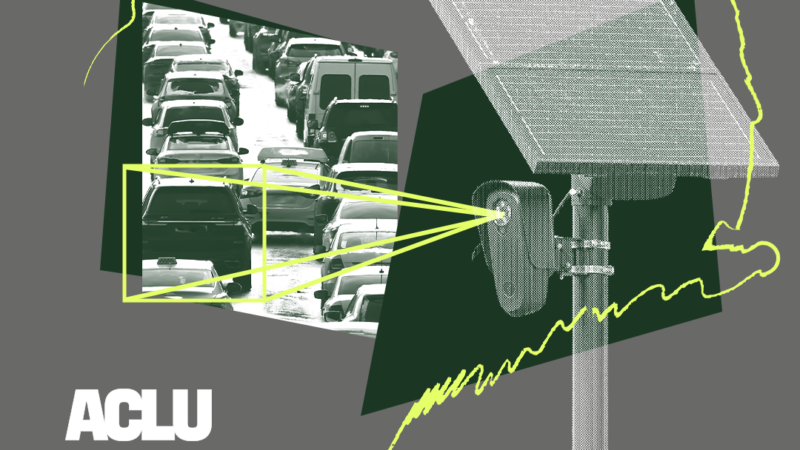
The number of surveillance companies in Michigan and across the country is increasing rapidly. At the same time, their capability for surveillance is expanding. License plate readers, cell site simulators, and more are proliferating our streets. Your privacy is at stake.
Where do my privacy rights come from?
It is a core principle that our government does not invade people’s privacy and collect information about citizens’ activities, just in case they do something of interest to them. In fact, this type of “just in case” information collection would essentially treat every person in America like a potential criminal suspect.
The 4th Amendment of the U.S. Constitution protects us all from “unreasonable searches and seizures” by the government and guarantees “the right of the people to be secure in their persons, houses, papers, and effects.” This means the government needs permission, based on probable cause and individualized suspicion, not only to search your home but also to monitor the data we all produce constantly and mostly involuntarily, like your cell phone location data.
Why is protecting my privacy rights important?
Privacy isn’t just about using passwords on your accounts: it’s about the ability to decide what parts of your life are known to the public and the government, and what parts are known only to you or to friends and family.
Privacy isn’t about protecting people who do something wrong; it’s about protecting all people who don’t want every detail of their lives to be public.
How does government surveillance impact my privacy?
Our digital footprint is constantly expanding, containing data about the most intimate aspects of our lives. This includes our communications, whereabouts, searches, etc. When the government has easy access to this information, we—and the people we care about—lose more than just privacy and control over our information. Free speech, security, and equality suffer as well.
The rapid growth of surveillance technologies has outpaced the regulations and safeguards that govern them, if they exist at all. This means the potential for privacy violations (and worse) is significant. Companies and government agencies are deploying new privacy-invasive tech before the public is even aware it exists and certainly before we’ve knowingly consented.
Surveillance Tech Information
The Latest
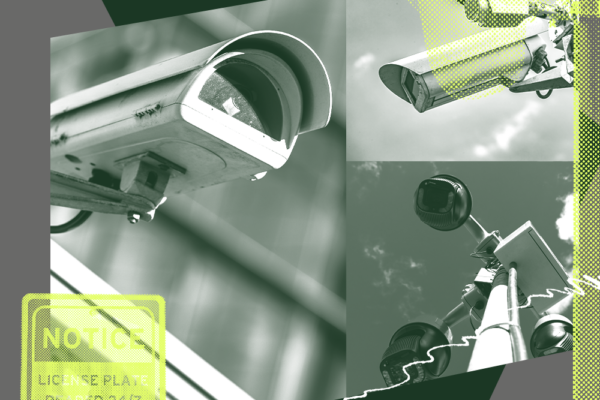
Get the Flock Out – Fighting Creepy Cameras Tracking Us

Civil Rights Advocates Achieve the Nation’s Strongest Police Department Policy on Facial Recognition Technology

Farmington Hills Father Sues Detroit Police Department for Wrongful Arrest Based on Faulty Facial Recognition Technology

ACLU Statement on Second Wrongful Arrest due to Face Recognition Technology
Stay Informed
Sign up to be the first to hear about how to take action.
By completing this form, I agree to receive occasional emails per the terms of the ACLU’s privacy statement.
By completing this form, I agree to receive occasional emails per the terms of the ACLU’s privacy statement.